Redefining apparel manufacturing: Rovo's Decentralised Field Model
Premium apparel production cannot be managed from an inbox. Real control comes from technical expertise and oversight on the factory floor.
Sophia
Last updated on 3/16/2026
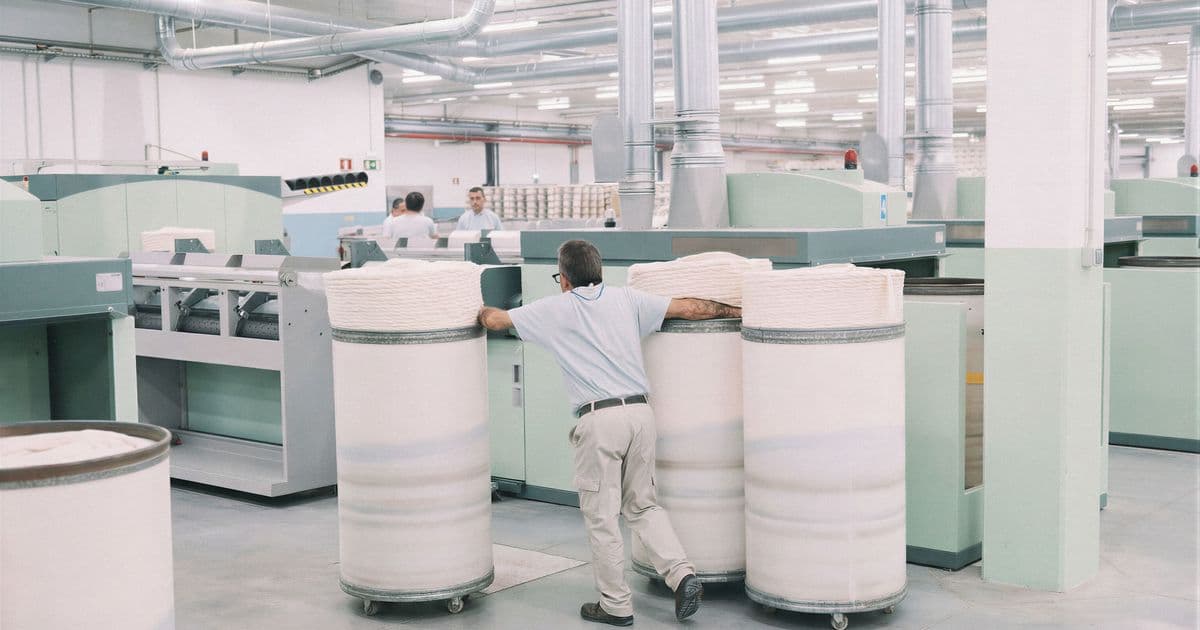
In the premium fashion industry, there is a persistent illusion. It is the idea that if you send a perfect tech pack to a factory in Europe, you will get a perfect product back. But any production director knows the reality is different.
The moment that PDF leaves your inbox, it enters a "black box." You rely on updates, photos, and emails to manage a physical, tactile process happening thousands of miles away. When a zipper placement is 2mm off, or a fabric creates unexpected drag, that email chain can take days to resolve. This decision latency is the silent killer of margin and quality.
The problem isn't the factory’s capability; it is the brand’s distance. You cannot audit quality through a screen, and you cannot solve complex production blockers with a Zoom call. To secure integrity and speed, apparel production management has to move from the inbox to the factory floor.
The problem with the "relay" model
For decades, brands have relied on sourcing partners to bridge this gap. However, the traditional agency model often functions like a relay race. In this model, the brand finds a problem and tells the agent. The agent relays the message to the factory. The factory replies to the agent, who then relays the answer back to the brand.
This structure turns the partner into a messenger rather than a manager. Information gets diluted, and accountability becomes fragmented. You are forced to micromanage a factory in Portugal or Vietnam from your office, approving every minor fix because your partner lacks the authority or expertise to do it for you.
The shift to a decentralised field model (DFM)
This structural failure demands a structural solution: the Decentralised Field Model (DFM). It is a specific way of operating where the "middleman" stops being a passive link and becomes an active, technical extension of your team. In this workflow, you do not send your own staff to the factory. Instead, you engage a partner who deploys their own expert product teams directly inside the manufacturing ecosystem.
Collaboration is front-loaded. You provide the vision and the initial brief. The partner's technical experts validate feasibility immediately and align on standards before a single fabric is cut. Once production begins, the dynamic changes. Because the partner has specialists in knit, tailoring, or dyeing stationed on the floor, they act as a single point of coordination.
If a production blocker arises, they don't email you for instructions. They assess the issue and solve it immediately based on the agreed standards. You don't manage the crisis. You receive the final product.
The "1-10-100" rule of quality
Why does this on-site presence matter financially? In manufacturing, there is a concept called the 1-10-100 rule. If you catch an error during development (the "1" stage), it costs $1 to fix. If you catch it during production (the "10" stage), it costs $10. If the error reaches the customer (the "100" stage), it costs $100 in returns and brand damage. The "Relay Model" usually catches errors at stage 10 or 100.
Because DFM field teams are physically present, they solve production blockers 3x faster than traditional models. They catch the error at stage 1. This is how you achieve the "impossible" triangle of manufacturing: 40% faster lead times while simultaneously securing 20% lower landed costs.
A case study in control
At ROVO, this approach became foundational. The results show that presence is not a “nice to have.” It directly impacts revenue. Take our work with Stüssy, a brand with high execution demands. Applying the DFM didn’t just maintain their standards. It improved them.
Quality: We saw a 22% drop in defects. This is the direct result of catching issues before they become finished goods.
Cost: We achieved an average saving of $2.78 per garment. This confirms that paying for "oversight" is cheaper than paying for mistakes.
Revenue: The improved flow and faster time-to-market contributed to a $6.5M revenue uplift.
Beyond the dashboard
Brands are already facing increasing pressure for transparency. With new regulations around Digital Product Passports and sustainability compliance coming into force, brands are now legally responsible for every step of their supply chain. Many partners try to solve this with software, offering a "transparent dashboard" as the solution. But a dashboard is only as good as the data fed into it. If the data entry is disconnected from reality, the dashboard becomes a distraction rather than a tool.
True transparency isn't just data; it is presence. It requires a partner who can bridge the gap between mass manufacturing and customised production by verifying the process in person. You cannot run a premium brand from an inbox. To ensure integrity, innovation, and lasting value, you need a partner who is physically where the product is made. That is the power of the Decentralised Field Model.
Share this post